Weak U.S. Job Growth Forecast Before Fed Meeting — What It Means Globally & for India
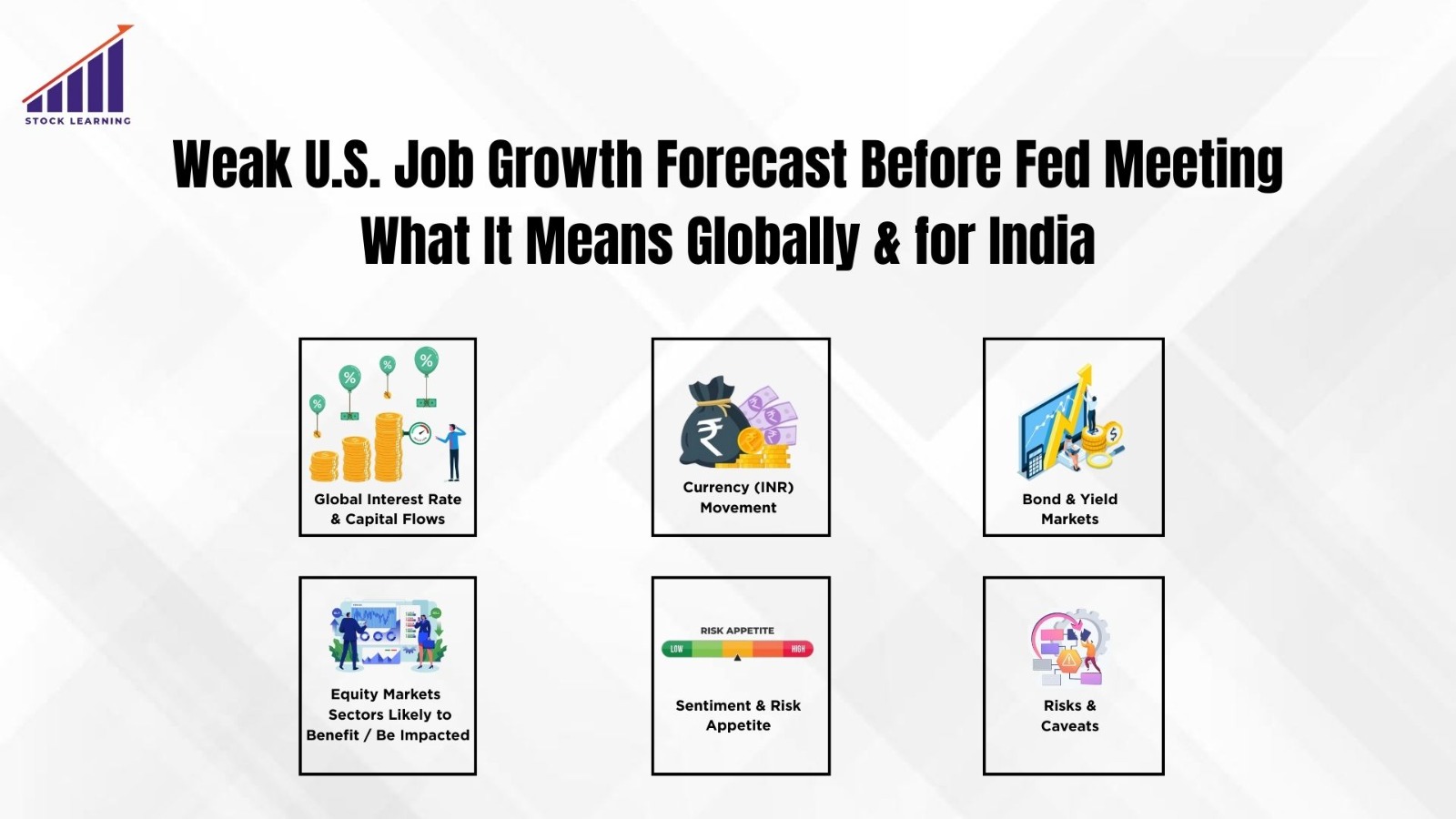
Weak U.S. Job Growth Forecast Before Fed Meeting — What It Means Globally & for India
What’s the News?
According to a Bloomberg survey, U.S. nonfarm payroll additions for September are expected to be around 50,000 jobs, reflecting a sluggish labor market. The unemployment rate is likely to remain near 4.3% — one of the highest in recent years.
This comes at a crucial time, just before the U.S. Federal Reserve's next policy meeting (end-October), where market participants are keen to see whether the Fed will lower interest rates again.
Underlying reasons for weak job growth include companies trying to absorb higher costs (like import duties) and cautious hiring due to economic uncertainty.
What Does This Mean for India / Indian Markets?
1. Global Interest Rate & Capital Flows
A weak U.S. jobs number might increase expectations that the Fed could cut interest rates. Lower U.S. interest rates tend to make emerging markets (like India) more attractive to foreign investors, as borrowing costs in the U.S. go down.
Increased foreign capital inflows may support equities and fixed-income in India.
2. Currency (INR) Movement
If U.S. rates ease, the U.S. dollar could weaken. That could relieve some downward pressure on the Indian rupee (INR) against the USD.
A stronger rupee helps reduce costs for importers and eases pressure on inflation.
3. Bond & Yield Markets
Indian government bond yields may come under downward pressure (i.e. yields falling) as global yields adjust lower.
Domestic borrowing costs might ease a little, benefiting corporates.
4. Equity Markets – Sectors Likely to Benefit / Be Impacted
Sector Likely Impact / Reason
Financials / Banking Could benefit from lower interest rates and increased lending activity. However, margins might compress if rates fall too much.
Exporters / IT / Tech A weaker USD or favorable currency movements might hurt exporters’ margins, though it depends on hedges.
Consumer / Discretionary Lower interest rates / better capital flows may increase liquidity and consumer sentiment.
Capital Goods / Infrastructure Lower yields and easier financing can boost infra / capex-linked stocks.
Commodity / Oil / Energy Mixed effect — global demand weakness may weigh, but cost structures and international pricing also matter.
5. Sentiment & Risk Appetite
Markets are often sentiment driven. A weak U.S. jobs number can spark optimism that the Fed may ease — boosting risk appetite globally.
India, being an emerging market, may see higher inflows, pushing up equity indices.
6. Risks & Caveats
The U.S. jobs data is a forecast, not final. If it surprises on the upside, the Fed could maintain tighter policy.
Domestic factors (inflation in India, RBI policy, fiscal situation) also play a strong role — global tailwinds can help but won't override local realities.
Currency volatility, global shocks (e.g. geopolitical events), or weak foreign investor sentiment could negate positive flows.
Final Thoughts
The forecast of weak U.S. job growth ahead of the Fed meet is a development worth watching closely. If the data holds, it could tilt global expectations toward easing monetary policy, which may provide a favorable tailwind for Indian equities, lower bond yields, and some breathing room for the rupee.
But, as always, the global cues are only one part of the story. Indian markets will be shaped by a confluence of global trends + domestic economic policy + sector-specific dynamics.
By Nehal Taparia
This content is for educational and knowledge purposes only and should not be considered as investment or Trading advice. Please consult a certified financial advisor before making any investment or Trading decisions.
Latest Course





Latest posts





Our Recent FAQS
Frequently Asked Question &
Answers Here
Q1: Why is U.S. job growth important for India?
Because U.S. labor data is a major indicator of economic strength, which influences Fed policy. Fed actions (raising or cutting rates) often drive global capital flows, which in turn affect Indian markets via foreign investments, currency markets, and overall investor sentiment.
Q2: If jobs growth is weak in the U.S., will the Fed definitely cut rates?
Q3: How quickly can Indian markets react to U.S. jobs data?
Q4: Which sector offers the best opportunities in India if this scenario plays out?
Q5: What should retail investors in India do in such a scenario?
Copyright © By The Stock Learning. Design & Developed by Techno Duniya